The Haunting Echo: Unveiling the Meaning Behind Peaky Blinders' "Red Right Hand"
Few television series have managed to brand themselves so distinctly with a piece of music as
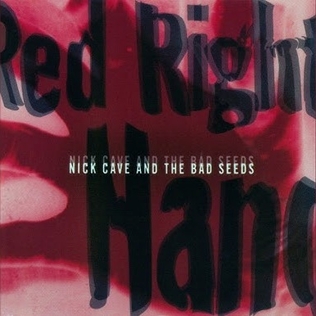
Peaky Blinders has with Nick Cave & The Bad Seeds' "Red Right Hand." From the very first ominous notes to its industrial clang and unsettling lyrics, the song has become synonymous with the gritty, dangerous world of Tommy Shelby and his Birmingham empire. For fans worldwide, hearing the
Peaky Blinders Theme Tune immediately conjures images of smoke-filled streets, razor-bladed caps, and Cillian Murphy’s piercing gaze. But what exactly does "Red Right Hand" mean, and why was this particular track, originally released decades before the show, the perfect fit for such an iconic series? Let's delve into the dark heart of this unforgettable anthem.
The Ominous Anthem: Why "Red Right Hand" Defines Peaky Blinders
Long before it became the definitive theme for the Shelby clan, "Red Right Hand" emerged from the creative depths of Nick Cave & The Bad Seeds in 1994, featured on their album
Let Love In. Its distinctive sound – a brooding, blues-infused narrative wrapped in a cloak of gothic intensity – was instantly captivating. The song’s atmospheric quality, marked by its clanging percussion, sparse instrumentation, and Cave's signature baritone, immediately evokes a sense of foreboding and a world on the brink.
When
Peaky Blinders premiered in 2013, creators like Otto Bathurst and Tom Harper made an inspired choice. They selected this pre-existing track as their opening theme, forging what many now consider one of the most effective pairings of music and television in the modern era. The song's industrial rhythm perfectly encapsulates the post-WWI Birmingham landscape – a city scarred by war, defined by its factories, and ripe for the emergence of powerful criminal syndicates. It sets an immediate, unforgettable tone for the series, signalling a world where power is seized, not given, and where morality is a blurred line. The
Peaky Blinders Theme Tune doesn't just introduce an episode; it plunges the viewer directly into the dark, compelling atmosphere of the show.
For a deeper dive into how this musical masterpiece became the soul of the series, explore
The Perfect Pairing: Why 'Red Right Hand' Defines Peaky Blinders.
Unpacking the "Red Right Hand": A Dive into its Literary Roots and Lyrical Prophecy
The phrase "Red Right Hand" itself is a powerful literary allusion, tracing its origins back to John Milton’s epic 17th-century poem, *Paradise Lost*. In Milton's masterpiece, it refers to the "red right hand" of God, symbolizing divine vengeance, unstoppable power, and the inescapable judgment brought down upon sinners. It evokes a force that is absolute, terrifying, and ultimately, beyond human control.
This metaphor perfectly underpins the narrative of *Peaky Blinders* and the character of Thomas Shelby. Tommy, with his calculating mind, ruthless ambition, and unwavering devotion to his family, often acts as a quasi-divine, vengeful force within his own criminal empire. He wields immense power, doling out his own form of justice and retribution, striking down those who stand in his way or threaten his family. His actions, though often morally ambiguous, possess an almost biblical certainty within the show's context – a "red right hand" dealing out fate in the grim streets of Birmingham.
The lyrics of Nick Cave's song further cement this connection, painting a vivid, almost prophetic portrait of a figure eerily similar to Thomas Shelby:
* "On a gathering storm comes a tall handsome man / In a dusty black coat with a red right hand." This line immediately introduces our protagonist – charismatic, powerful, and carrying a hidden menace.
* "He'll wrap you in his arms, tell you that you've been a good boy / He'll rekindle all the dreams it took you a lifetime to destroy." This speaks to Tommy's seductive charm, his ability to manipulate and offer false hope, drawing people into his orbit.
* "He's a god, he's a man, he's a ghost, he's a guru / They're whispering his name through this disappearing land." This encapsulates the enigmatic and almost mythical status Tommy achieves, feared and respected in equal measure, a figure of legend in a changing world.
* "Stacks of green paper in his red right hand." Here, the "red right hand" shifts slightly, becoming a symbol not just of vengeance but also of the immense, corrupting power of wealth and influence that Tommy acquires.
The song’s ability to describe Tommy Shelby so perfectly, despite being written decades earlier, is a testament to its timeless themes of power, corruption, and the darker side of human ambition. It’s a character study in musical form, pre-empting the complex anti-hero that would captivate millions.
Beyond the Original: The Evolving Sound of Peaky Blinders
While Nick Cave & The Bad Seeds' original rendition remains the steadfast anchor, one of the brilliant creative decisions made by the producers of *Peaky Blinders* was to evolve the
Peaky Blinders Theme Tune throughout its six seasons and 36 episodes. The series became renowned for its incredibly diverse and often anachronistic musical palette, featuring contemporary artists that somehow perfectly blended with the 1920s setting.
To reflect the changing tones of the show and the evolving psychological states of its characters, particularly Tommy Shelby, the producers commissioned various haunting covers of "Red Right Hand." Most notably, PJ Harvey recorded a slowed-down, eerier version specifically for Season 2. Her rendition added a layer of mournful introspection and raw vulnerability, mirroring Tommy's increasingly complex inner turmoil and the deeper, darker consequences of his actions. Other notable artists who lent their unique interpretations include Arctic Monkeys and Iggy Pop, each bringing a fresh perspective while maintaining the song's core unsettling essence.
This strategic use of multiple versions of the same theme is a powerful storytelling device. It demonstrates how a foundational piece of music can adapt and grow with a narrative, deepening its emotional impact without losing its identity. It allows a show to signal shifts in mood, character arcs, or plot developments purely through sound, offering a rich sonic experience for dedicated viewers. It's a testament to the versatility of the original composition and the keen artistic vision of the show's music supervisors.
Discover the fascinating journey of these different interpretations in
From Nick Cave to PJ Harvey: The Many Versions of Peaky Blinders' Theme.
The Enduring Legacy of an Iconic Theme
Though the final episode of *Peaky Blinders* aired on April 3, 2022, the series and its iconic theme song continue to resonate deeply with a dedicated global fanbase. "Red Right Hand" is more than just a catchy intro; it's an integral part of the show's identity, a musical touchstone that encapsulates its spirit, its danger, and its irresistible allure.
The song's deep literary roots, combined with its perfectly aligned lyrical content and its chilling musicality, elevate it beyond a mere theme tune. It’s a piece of art that enriches the narrative, giving viewers a deeper understanding of the world and characters they are immersed in. It's a rare example of a song becoming utterly inseparable from the visual medium it accompanies, achieving a legendary status that will undoubtedly echo for years to come.
In essence, "Red Right Hand" is the sound of ambition, power, and consequence. It is the perfect soundtrack for the rise and fall, the triumphs and tragedies, of the Shelby family, forever etched into the fabric of television history.