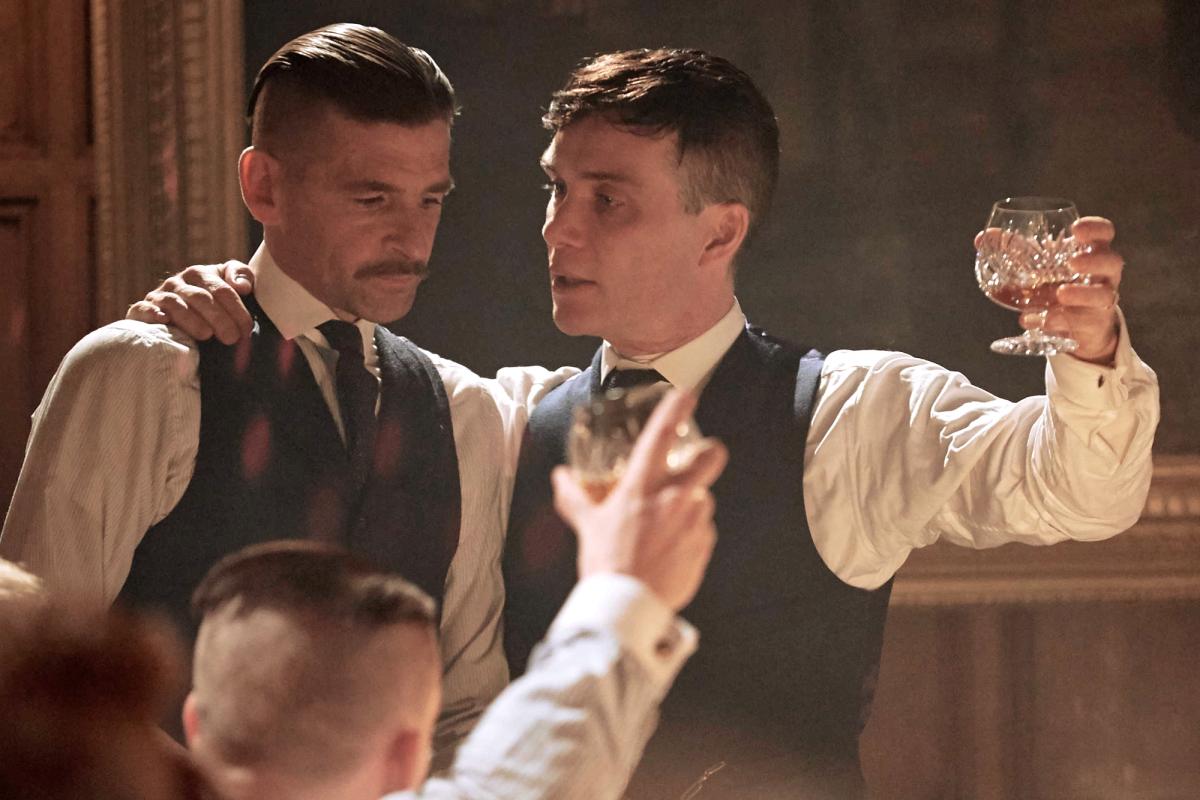
From the moment the ominous guitar riff and Nick Cave’s brooding vocals cut through the screen, setting the tone for the brutal yet captivating world of the Shelby family, it was clear: Peaky Blinders had found its voice. The series, set in the gritty post-World War I streets of Birmingham, became synonymous with its iconic opening track, 'Red Right Hand' by Nick Cave & The Bad Seeds. Far more than just background music, this song became the very pulse of the show, evolving and transforming alongside the saga itself. While the original version is an undisputed anchor, the journey of the Peaky Blinders theme tune is a rich tapestry woven with haunting covers by an array of acclaimed artists, each adding a new layer to its enigmatic power.
The Original 'Red Right Hand': An Anthem Born Before Its Time
The decision to feature 'Red Right Hand' as the Peaky Blinders theme tune is often hailed as one of television's most brilliant pairings of music and narrative. Originally released in 1994, almost two decades before the series first premiered in 2013, the track was not custom-made for Thomas Shelby and his gang. Yet, its industrial clanging, sinister melody, and foreboding lyrics perfectly encapsulate the bleak and dangerous atmosphere of 1920s Birmingham. Nick Cave & The Bad Seeds crafted a sonic landscape that felt inherently entwined with the show's dark aesthetic, almost as if it had been waiting for its destined visual counterpart.
The song's title, 'Red Right Hand', itself carries a profound literary weight. It’s a direct allusion to John Milton’s epic poem Paradise Lost, where it signifies the vengeful, unstoppable power of God. In the context of Peaky Blinders, this metaphor is chillingly apt for the Shelby family – particularly for Thomas Shelby. His ruthlessness, strategic genius, and unyielding ambition embody this divine, almost supernatural, force of vengeance and control within his criminal empire. The lyrics famously speak of a "tall handsome man / In a dusty black coat with a red right hand," a description that immediately conjures the formidable image of Cillian Murphy's Tommy Shelby, a figure both revered and feared.
Before becoming the voice of the Peaky Blinders, 'Red Right Hand' had already made its mark in popular culture, featuring in films such as Scream and Dumb and Dumber. However, it was its consistent and powerful presence across all six seasons of the BBC series that cemented its status as an iconic anthem. Directors like Otto Bathurst and Tom Harper masterfully integrated the song, using its chilling introduction to prepare audiences for the brutal intricacies of the Shelby family's world.
Beyond Nick Cave: The Evolving Sound of the Shelby Saga
One of the hallmarks of Peaky Blinders, beyond its gripping storytelling and stellar performances, was its remarkably diverse and expertly curated musical palette. While Nick Cave's original 'Red Right Hand' remained the series' foundation, the show's creators understood the power of musical evolution to mirror the changing fortunes and psychological depths of its characters. This led to the ingenious decision to commission various covers of the Peaky Blinders theme tune, allowing renowned artists to imprint their unique interpretations onto the already powerful track.
PJ Harvey's Haunting Rendition
Perhaps the most celebrated of these reinterpretations came from the enigmatic PJ Harvey. Tasked specifically by the show's producers for Season 2, Harvey delivered a slowed-down, eerily atmospheric version that perfectly captured the burgeoning complexity and darkening soul of Thomas Shelby. Her vocals, filled with a raw, almost spectral quality, transformed the song from an industrial rock anthem into a haunting lament. This version was pivotal; it signaled a shift in the show's tone, moving beyond raw street violence to explore deeper psychological turmoil and the internal battles waged by its protagonist. Harvey’s cover didn't just play on the show; it became an integral part of its emotional architecture, a stark auditory reflection of Tommy's increasingly burdened conscience.
Other Notable Interpretations
The series continued this tradition throughout its run, inviting a cadre of influential musicians to offer their take on 'Red Right Hand'. Artists like the Arctic Monkeys and Iggy Pop lent their distinctive styles, each version adding a fresh layer of interpretation and resonance. The Arctic Monkeys, with their signature indie rock grit, could infuse the track with a contemporary swagger, while Iggy Pop’s raw, punk sensibility would strip it down to its primal, dangerous core. These diverse covers didn't merely serve as stylistic flourishes; they enhanced the narrative, subtly hinting at the show's escalating stakes, the expanding scope of the Shelby empire, and the ever-present shadow of violence that followed Tommy. By allowing these different voices to articulate the same powerful message, the series demonstrated a profound understanding of how music can shape and deepen a narrative experience, ensuring the Peaky Blinders theme tune never grew stale but instead, blossomed with each new iteration.
Deconstructing the Lyrics: The Prophetic Power of 'Red Right Hand'
Beyond its musicality, the lyrical content of 'Red Right Hand' serves as an almost prophetic narrative for the entire Peaky Blinders saga, particularly for the character of Thomas Shelby. Nick Cave's words paint a vivid picture of a mysterious, powerful figure who emerges from the shadows to exert his will over a desolate landscape:
- "Take a little walk to the edge of town / Go across the tracks / Where the viaduct looms, like a bird of doom..." – This imagery immediately evokes the grim, industrial setting of Birmingham and the underworld Tommy inhabits. The "bird of doom" could be a direct reference to the ever-present threat of violence or the watchful eye of the authorities.
- "On a gathering storm comes a tall handsome man / In a dusty black coat with a red right hand" – This is the definitive introduction to Tommy Shelby. He is not merely a man; he is a force of nature, emerging from chaos, his "red right hand" symbolizing his power, his capacity for both protection and destruction.
- "He'll wrap you in his arms, tell you that you've been a good boy / He'll rekindle all the dreams it took you a lifetime to destroy" – These lines speak to Tommy's charisma and manipulative prowess. He can offer salvation and hope, even as he draws individuals deeper into his dangerous world. He preys on desperation, offering a fleeting sense of security.
- "He's a god, he's a man, he's a ghost, he's a guru" – This multifaceted description perfectly captures the enigma of Tommy Shelby. To some, he's a savior; to others, a ruthless criminal; to many, an almost mythical figure whose presence looms large over their lives. His ability to appear and disappear, to defy expectations, makes him almost spectral.
- "Hidden in his coat is a red right hand" – This repetition emphasizes that beneath any veneer of charm or legitimacy, his true power and danger lie in his "red right hand" – his unwavering will, his network, and his capacity for violence. It's a constant reminder of the unseen forces he commands.
- "Stacks of green paper in his red right hand" – As the series progresses, this line becomes increasingly relevant, signifying Tommy's growing wealth and the material power that accompanies his influence. The "red right hand" is not just about violence but also about financial control and empire-building.
The lyrics are a masterful piece of foreshadowing, an ongoing character sketch that defines Tommy Shelby before he even speaks a word. They highlight his duality as both a protector and a destroyer, a figure who can offer succor while simultaneously leading others to their demise. The 'Red Right Hand' is not just a poetic phrase; it’s the very essence of Tommy’s being, a symbol of his power, his ruthlessness, and his ultimate control over the destiny of those around him. For a deeper dive into this phrase, explore What Does 'Red Right Hand' Mean? Peaky Blinders' Iconic Theme Explained.
Why 'Red Right Hand' Endures: A Masterclass in TV Soundtrack Synergy
The enduring appeal of the Peaky Blinders theme tune lies in more than just a catchy melody; it’s a testament to the masterful synergy between music and visual storytelling. The effectiveness of 'Red Right Hand' is a case study in how a theme song can become an indispensable character in its own right, shaping viewer perception and deepening narrative impact. Its ominous tone instantly transports audiences into the grim reality of post-war Birmingham, signaling the dark, complex drama about to unfold.
The consistent use of the theme, whether in its original form or through its various acclaimed covers, provides a vital through-line for the series. It acts as a sonic anchor, connecting the disparate threads of the Shelby family’s journey from street-level gangsters to figures of national and international influence. Each version, from the raw power of Nick Cave to the eerie beauty of PJ Harvey, reflects an intentional creative choice by the show's producers and directors, demonstrating a deep understanding of how music can subtly influence mood and foreshadow narrative developments. This intentionality ensures that the song never feels out of place but instead continually resonates with the show's evolving tone.
Ultimately, 'Red Right Hand' has transcended its role as a mere theme song. It has become a global anthem for a dedicated fanbase, an instantly recognizable sonic signature that evokes the intensity, style, and brutal charm of Peaky Blinders. It’s a powerful reminder of how the perfect song can elevate a television series from mere entertainment to an unforgettable cultural phenomenon. For more on this perfect pairing, check out The Perfect Pairing: Why 'Red Right Hand' Defines Peaky Blinders.
In conclusion, the journey of 'Red Right Hand' as the Peaky Blinders theme tune is a remarkable example of how music can weave itself into the fabric of a story, becoming as iconic and indispensable as the characters themselves. From Nick Cave's original, a dark prophecy echoing through time, to the haunting interpretations by PJ Harvey and others, the song has evolved, adapting its sound to match the shifting fortunes and deepening shadows of the Shelby family. It’s a testament to the genius of its creators and the vision of the show's producers that a track conceived decades before could so perfectly define one of the most compelling dramas of the modern era, leaving an indelible mark on television history.